


When John Madden was the Raiders’ ‘Unknown Coach’

The Sporting Tribune
Editor’s note: This story first appeared in the November 1976 issue of SPORT magazine, written by Wells Twombly. Two months later, John Madden’s Raiders beat the Minnesota Vikings in Super Bowl XI. He went on to become a Hall of Fame coach, the defining voice of NFL broadcasts and the name on the best-selling football video game ever made. In 1976, SPORT still called him the Raiders’ “unknown coach.” Founded in 1946, eight years before Sports Illustrated, SPORT was America’s first national sports magazine. Through a partnership with SPORT magazine, The Sporting Tribune republishes a classic story and photos from the magazine’s archive each month.
Who's That Guy Standing Next To The Oakland Raiders? IT'S THEIR UNKNOWN COACH, JOHN MADDEN….
By Wells Twombly
When you consider the man's distinctive physical appearance and his joyous, flamboyant personality, it is all the more amazing that so few people have heard of John Madden of the Oakland Raiders. He is almost impossible to avoid, stomping the sidelines on an autumn after-noon, his large face flaming red, shouting and accusing as if someone was about to burn his house and slaughter his family. And he is the most successful unknown coach in the world.
Madden simply does not register on the average person's mental screen. Try this simple test on your friends. Back them up against the bar after a long day's work and ask them to identify the only coach who ever won 70 games his first seven years in the National Football League. Or ask: Who has coached six division champions in the past seven years? Or: Who has produced more winning streaks of five games or better than any other active coach?
John Madden, at age 40, has accomplished more sooner and received less credit for it than any other coach or manager you can name. All Madden does is win games. But the one game he doesn't win is the Super Bowl — and he works for Al Davis, a club owner so overpowering that he blots out the sun. So John Madden remains an individual waiting to be discovered.
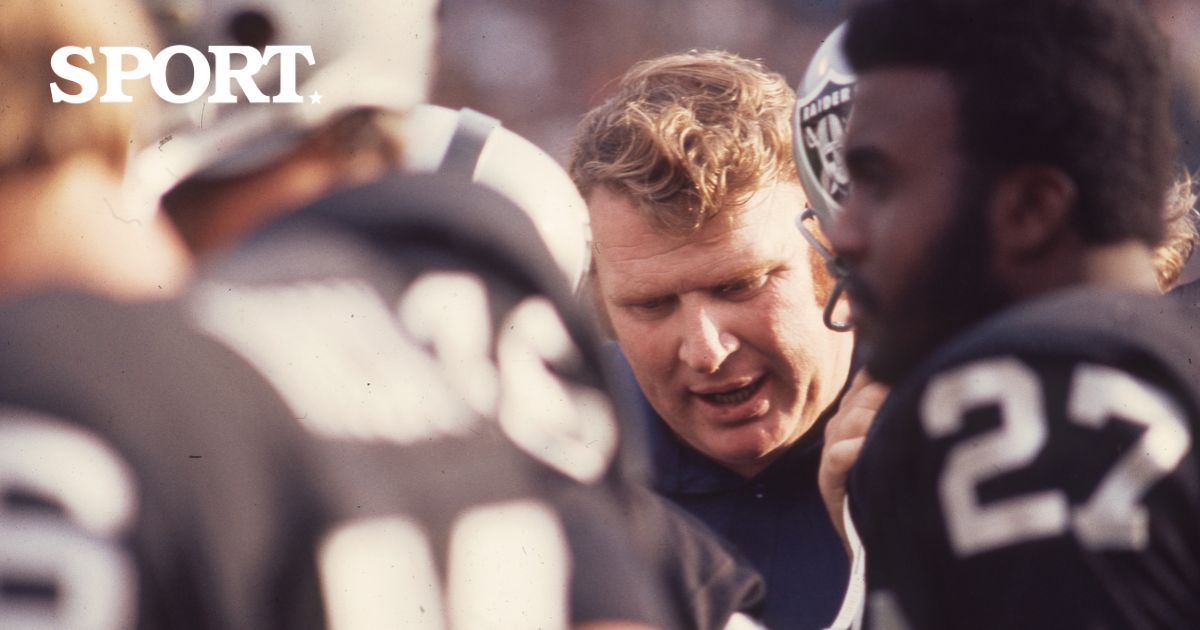
"Right off, I'd say that Madden is one of the finest young coaches around," says Paul Brown of the Cincinnati Bengals. "Rarely does he go into a game with only one way to beat you. Sometimes he has three, four or five. The man is a real thinker. He's a real intellectual." Madden has been described by one of his former players, defensive tackle Tom Keating, as "sweaty, like an Irish bartender on a milltown Saturday night." Photographers have won prizes taking his picture during games. One such picture leaps out at you from the wall of the lounge at the Pro Football Hall of Fame in Canton, Ohio. Madden's mouth is spread wide in anger. His freckles are blazing like militant polka dots. His massive fingers point toward a distant official who has committed some nameless sin.
Yet after games John Madden is invariably in breathless good humor. He grabs a can of his favorite soft drink and entertains the press with remarks that sound as if they were handed to him by a professional gag writer while he trudged up the tunnel from the field at the Oakland Alameda County Coliseum.
“Nothing like a real good breather to keep your heart pumping on a cold afternoon," he said after the Raiders defeated the Denver Broncos by three points one afternoon. "I've got this agreement with the concession people. All I have to do to make a lot of money is keep the people in their seats until the game is over. You get scared and you get hungry. That's right. Tighter the game, the more you eat. I get as much as ten percent."
That sort of tension-snapping chatter would get you canonized in New York, but Madden is not interested in coaching in New York. He made that clear to the Jets' management when they wanted to talk to him about becoming their head coach and general manager. He was happy in Oakland, a grubby town with mud flats and oil storage tanks.
Over the years, Madden has refused to discuss four other jobs. If the folks out there on the other side of the TV screens don't know his skills, the owners of other clubs do.
"It doesn't bother me that I'm not better known. This isn't a popularity contest. I'm not out to make a name for myself. I'm out to do what I always wanted to do … coach a pro football club. This is a cooperative effort and I'm a happy man.”
“People find this hard to accept,” Madden says, "but I simply don't want to leave the Oakland Raiders. Above all, I don't want to leave Al Davis. That is contrary to all the rumors and innuendos ever printed. This is an organization dedicated to winning. Most head coaches have to make their reports to people who aren't football men, guys who don't understand. Would you rather talk to Al Davis or to a guy who owns an oil company?"
It has been suggested that no mortal man can effectively work for Davis, who seemed to be on his way to a bronze bust in the Hall of Fame when he stopped coaching the Raiders long enough to become the commissioner of the American Football League who forced the merger with the NFL. Davis then returned to his original team, not as a mere head coach and general manager, but as an owner of 15 percent of the club.
"John Madden is a damn good coach," said former Raider running back Clem Daniels, "but no coach can relate the Davis system as good as Davis himself can.”
It is no secret that the Raider defense was rebuilt with younger operatives five years ago — and it was not Madden's idea. But whatever Davis wants, Davis usually gets.
“Al Davis is not a dictator,” says Al LoCasale, Davis' executive assistant. "He'll give you the benefit of his thinking and he wants results. But when one of us below him in The Organization, either me or John [Madden], makes his own decision, there's Al behind you backing you up. I think that Madden is probably freer than most head coaches. That may sound crazy, but it's true." When John Rauch quit as coach of the Raiders in 1969 to go to the Buffalo Bills "He took with him a fifty thousand dollar a year salary and all of our playbook," said Davis, people said the hiring of Madden was a noble experiment, that the day would come when Davis would knock off the nonsense and return as coach. Besides, Davis and Madden, an assistant coach, had been almost interchangeable anyhow. If Rauch heard Madden suggest something in a team meeting, Rauch said he didn't have to check to see if it was official.
“When Madden was an assistant, everybody knew that when he had a suggestion it came straight from Davis," said a former Raider assistant, who has since moved on to another team in the league. "For a while Tom Flores had trouble getting recognized by Madden after Flores became an assistant. I suppose John figured Tom was Al's new spy."
"It's true that Rauch left because he and I didn't see eye-to-eye," Davis said one afternoon. "It was partly my fault. I've changed a lot since then. I was still trying to coach when Rauch was here. I made some bad mistakes with him. But somebody had to move in because he [Rauch] simply panicked. Rauch had some problems. Maybe I had some problems, too. When John Madden became head coach, I was determined to let him run the show. If I do anything with John, it is strictly in the capacity of an advisory assistant coach.”
Having come so close to the Super Bowl six times in seven years, and having failed to survive the playoffs on each occasion, does not leave John Madden as limp as one might suspect. Five times, the team that won the Super Bowl was the team that eliminated the Raiders.
That is something to consider, Madden says.
"I just don't consider the Raiders to be losers because we aren't in the Super Bowl," he said, removing sweat from his forehead even as the summer sun scorched the hills of Sonoma County. "I heard Preston Pearson being interviewed after the last Super Bowl in Miami. He said that he was a loser and he didn't know how he would be able to face the good people of Dallas after disgracing them. Can you imagine that? The Cowboys had one hell of a season. They just didn't win the S Bowl. They fell three seconds short. Nobody else came that close. They were winners. Why can't they think of themselves as that? The Oakland Raiders were winners, too. We had a fantastic year in seventy-five, only a fool would call us losers. I refuse to let our players think their efforts made them lousy. I just hate that whole mentality that says if you don't go all the way, you aren't worth a pitcher of warm spit. I'm proud of our team."
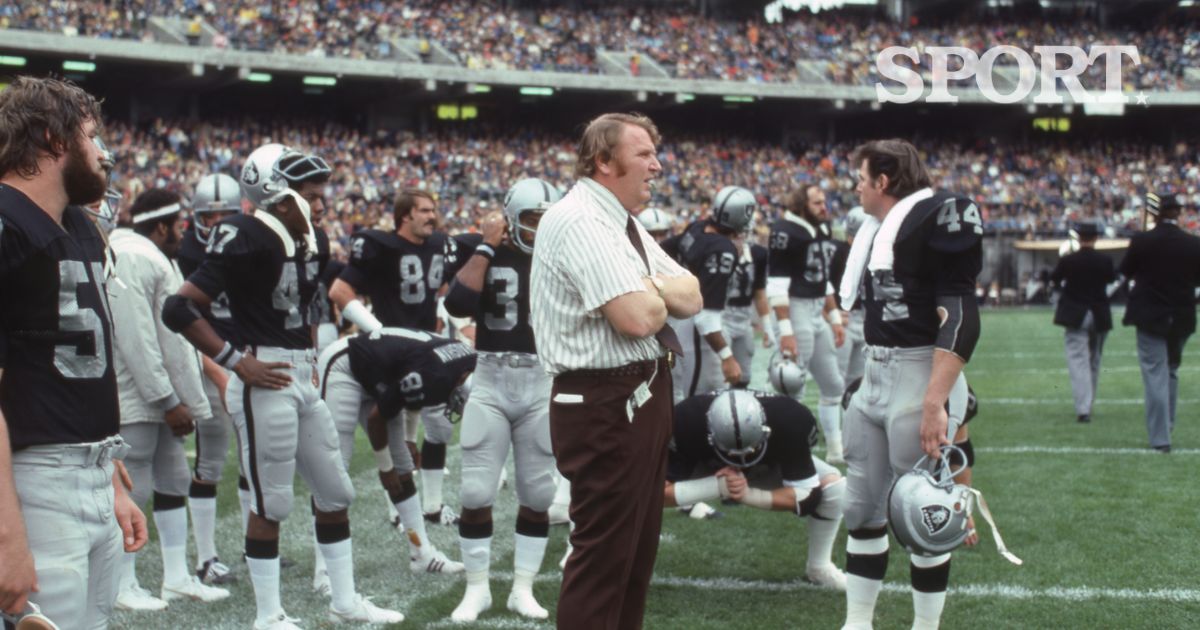
For the first seven years of his employment, Madden endured the men-against-the-world existence demanded of people within The Organization (always spelled with capital letters). His office was inside the Raiders black-and-silver blockhouse located just off the Admiral Nimitz Freeway, a long scar of concrete that rips down the eastern side of San Francisco Bay.
Now Madden's office, black-and-silver, of course, is located roughly three miles away on Alameda Is-land. It isn't far from a cheap hamburger stand that attracts sea gulls and truck drivers. In order to reach Madden's office, you have to pass a door that leads into a locker room for coaches. Above one locker is the omnipresent name A. Davis, who likes to work out with the boys.
"I honestly don't mind having Al with us or around us," said Madden. "I don't know how long it's going to take to let that sink in. I enjoy having him with me. We took a ride the other day and we talked football for maybe two hours. It was just great. That's the kind of relationship we have. He's my friend, about the best I've ever had.”
"I have more job security with the Raiders and Al Davis than, I think, any other head coach has,” Madden said. "I could have gone to the Jets and become a big name in New York, where big names are made all the time. Instead, I decided to stay here in Oakland and enjoy Northern California living."
Life is not supposed to be simple for the Oakland Raiders. They stress, according to their campaign literature, "pride and poise." By The Organization's own admission, it is as frivolous as the Gestapo and as merry as the CIA. When Madden became head coach at age 33, it did not astonish people with a working knowledge of Al Davis' mind. Madden had a strong grounding in fundamental football. That is what the Raiders drool over. As an offensive guard, Madden had a brief career with the Philadelphia Eagles until he ripped up the ligaments in his right knee.
"Im like any other All-American boy," he says, smiling. "I just wouldn't give up. I coached on the junior-college level and then spent two years at San Diego State before I came here as Rauch's linebacker coach."
Few people comprehend the complexities of the game as well as Don Coryell, former head coach at San Diego State and now with the St. Louis Cardinals. Coryell says he hated to see Madden leave him:
“The guy was as big as a bear and not the image you have of a coach who's all lean and mean. But Madden was double-smart. He could out-think anybody on any staff he was ever on. That's the kind of man you want for an assistant. But you know damn well somebody is going to take him away from you eventually. You can't keep a guy like that forever. When he told me he was going to the Raiders, I figured, ‘Well, Al Davis knows what he's doing… he nailed one of the finest assistants I have ever had.’"
Madden was also selected because his personality was so much different from Davis'. He was comfortably low-key and suitably obscure, thereby satisfying one of Davis' most relentless conceits, his belief that he can find talent in places no other man would consider.
The Organization seeks out a mysterious element known inside the blockhouse Nimitz as "Raider-types." A baseball freak since his mother wanted to buy him a minor-league baseball franchise as a present for his 16th birthday, Davis has long admired how well the Los Angeles Dodgers function as an organi-zation. The club owner there kept giving an obscure athlete named Walter Alston a series of one-year contracts. In his mind, Davis felt that he was hiring a football version of Walter Alston. The percentages would even out over the years and the Raiders would win more times than they would fail. They have. A couple of seasons back, John Madden got a three-year contract.
Madden, a commanding presence at six-foot-four and 260 pounds, is rare in his selflessness. It isn't true humility, exactly, but rather a strong sense of realism.
"Of all the men I ever played for," said George Blanda — who was eight years older than his coach on the day that he retired this summer — "John Madden was the kindest and most thoughtful. You could always count on John to put the team higher than him-self. I'm not blowing smoke. He was just a pleasure to play for and that's more than you could say for a lot of coaches."
If nothing else, John Madden brings to The Organization a sense of vitality and good-heartedness that it desperately needs.
When the Raiders beat Houston in the playoffs by a 56-7 score one year, he looked at the pack of writers and, with a perfect sense of timing, said, “Hope you guys don't expect this every week.”
On the evening before an important football game against the Dolphins in Miami, Madden was prowling the lobby, looking like an angry red machine as usual. A newspaperman said that he was every bit as nervous as the head coach and that the hotel bars made him edgy.
"Go right to room service and charge it to me," John said. "I’d join you, but there might be something in the lobby I'd miss.
John Madden, who was born in Austin, Minn., grew up in Daly City, Calif., where, as the song goes, the houses are all little boxes made out of ticky-tacky and they look just the same. He wanted to get a part-time job, but his father refused to let him. He wanted his son to enjoy himself.
“I must have had the most uncomplicated childhood you could imagine," he says. "My father thought that being a kid was the best reason there was for having a good time. So 1 played every sport they offered. I was on the football team and I was the catcher for the baseball team. I wanted to be a lawyer and I guess I had the grades, but my father asked me what I really wanted to be. I wanted to be a football coach. I went to Cal Poly. They trained me for football coaching and I'm really happy.”
“When Al called me to offer me the job, he asked me if I was surprised and I had to tell him the truth, that I wasn't," Madden said. "I was only thirty-three then, the youngest head coach in the league. I knew there were some serious misunderstandings between John and Al. But I felt I had more flexibility. I'd be a fool not to listen to Al's advice." After the Raiders lost another AFC championship game last January-to the Pittsburgh Steelers 16-10, John Madden walked into the visiting coaches room with his eyes lowered, in deep remorse. The writers swarmed around him and Madden said, "I really felt we were going to win this one. I just had a good feeling about it. I thought we were ready. And we were. But they whipped us. They came at us and they beat us and they are probably the best team in the league." Then a writer asked him a question, but he addressed the coach of the Oakland Raiders as "Al." Madden looked at the reporter and mumbled, "My name's John. That's a helluva thing at this point. It is. But as Al Davis said after this game: ‘They can talk about the weather, how cold it was, how the field was but the only thing that counts is whether you win or not.’ We didn't win."
On and on it goes. Every season, John Madden's statistics are fantastic: He is only 26 victories behind Vince Lombardi, and Madden's winning percentage is .769, as against the .766 of the former Green Bay despot. But Lombardi won a bunch of championships and Madden's teams keep losing them. Nobody ever called Vince "AI."
